Nashville’s Newest Museum: National Museum of African American Music
The National Museum of African American Music is a beautiful celebration and preservation of African American music and its history — but it's so much more than that. Here's why you should make it a point to visit this new Nashville museum.
The long-awaited National Museum of African American Music (NMAAM) is officially open, and it’s a timely and essential addition to Nashville’s — and our country’s — narrative. The only one of its kind and 20 years in the making, the museum is 56,000 square feet of culturally significant music and civil history, presented in one poignant and thoughtfully cultivated package. And if there’s one crucial takeaway from the experience of visiting the museum, it’s this: music sews a common thread that unites us all. If you live in Music City, you’re in luck. If you don’t, the museum isn’t merely a stop on your next trip to Nashville; it’s the destination.
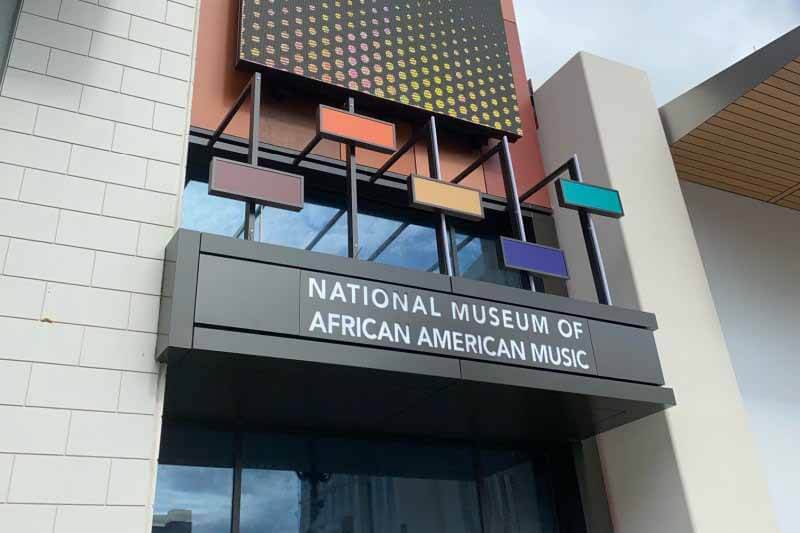
PinThe National Museum of African American Music has finally opened its doors!
Though it may be located in Music City’s bustling downtown metropolis, around the corner from lively Second Avenue and Broadway’s longstanding honkytonks, the museum offers a more serene ambiance. Pushing past racial and gender stereotypes, it delivers a fair perspective on the course of music’s history, from Negro spirituals, slave songs and field hollers to modern-day rap, R&B, hip-hop, and everything in between. It is a compelling retrospective on African American music’s roots and its pivotal role in our evolution, reminding us we are a country united by shared experiences. “The intent of the museum is to provide context for the music that we listen to so that it can bring us together,” explains President and CEO Henry Beecher Hicks III. “We can love the same song for different reasons, and that’s okay. There’s a story behind why we both love that song, and sharing that story is what brings our humanity out and can bring us together.”
Conceived in 1988, NMAAM was born from the desire for a Nashville-based museum that recounts honest stories of African American culture. The original concept was called The Museum of African American Music, Art and Culture, which was later changed when it became clear music was the standout component that tied everything together. “The original concept was [for it] to be a local Black history museum,” Henry tells us. “But in board meetings, one of the things I observed was that we were talking about music more than art and culture. I was new to town at the time, and I heard Butch Spyridon (President and CEO of the Nashville Convention & Visitors Corporation) talking about how we were refining [Nashville’s] brand not to be ‘Music City, USA,’ (which was heavily country music) but to be ‘Music City,’ which was a narrower name with a broader definition. The city’s brand is music, and if we focus the museum on music, it fits the brand. If it fits the brand, then people will understand it better and be more welcoming to the concept. When we figured out that there’s no place like it in the world that tells a story like this … then, it began to click.”
We are grateful to all our sponsors:
It’s also worth noting NMAAM isn’t simply a look into music’s history; it’s a deep dive into our social evolution, too. One of the standout features is its focus on recognizing women in music. “One of the things that we’ve noticed in the recording of music history is that women are often downplayed,” says Henry. “We decided to turn that on its head. You will see a very fair representation of women in terms of telling the story here.”
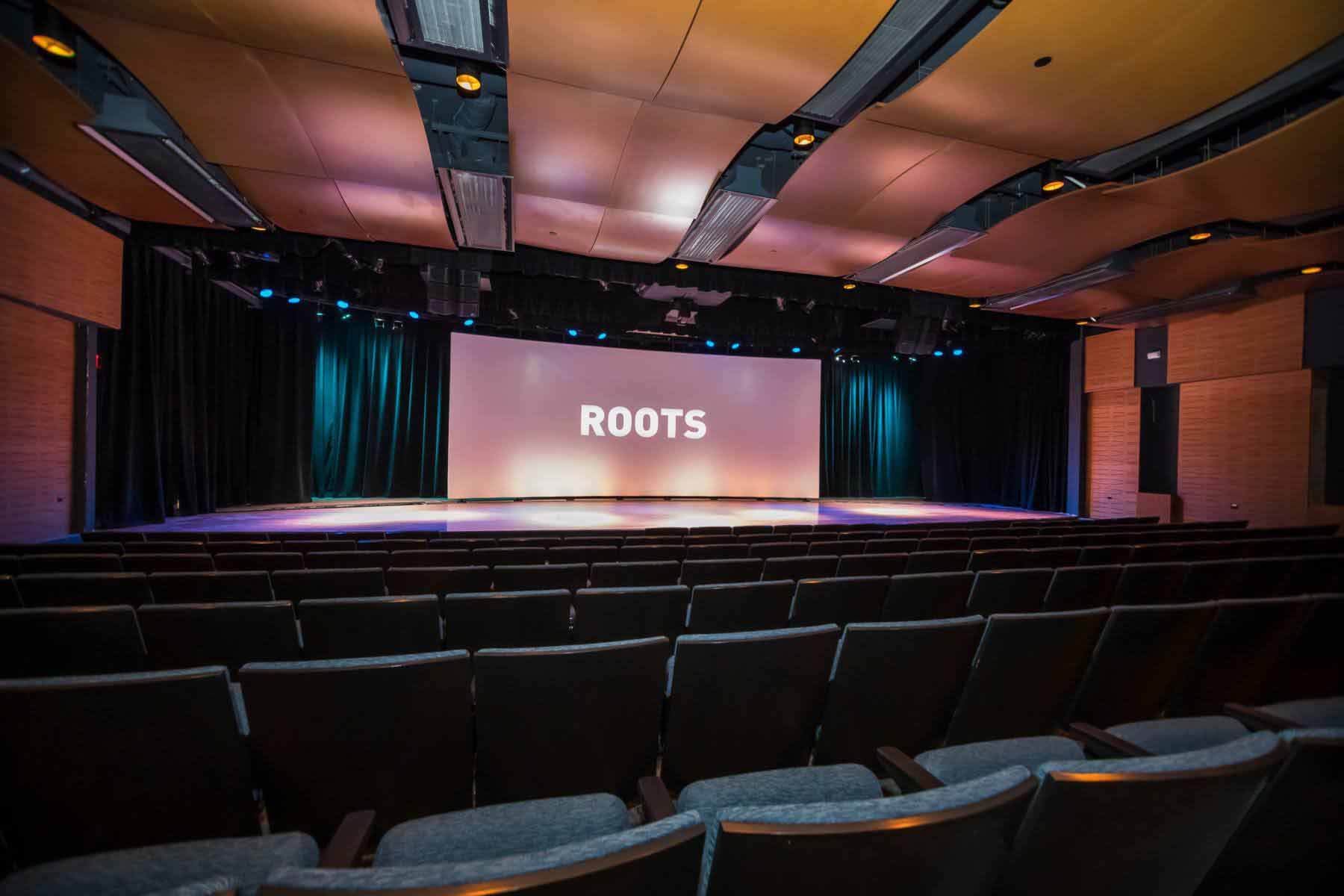
Construction of the museum began only two years ago, with COVID delaying the initial grand opening slated for the summer of 2020. While the current opening may enjoy less fanfare than intended (or than it deserves) due to pandemic protocols, NMAAM is a force to be reckoned with — beginning with the striking entry foyer that boasts a stately wall of donated instruments and a chandelier reminiscent of drumsticks. An orientation film begins the tour. Show-controlled doors invite you into an intimate, roughly 200-seat theater. After the film, which offers an overview of American music and a glimpse into what you’ll find throughout the rest of the museum, it’s off to the main gallery, Rivers of Rhythm. A permanent exhibition, it is a breathtaking space that suggests you are immersing yourself in water and beginning a journey. In fact, everything in the museum ties into that theme, with ceiling treatments to resemble waves and lighting to enhance the effect that you’re moving through water.
PinPost-COVID, Henry says their intention is for the NMAAM theater to host live concerts, corporate presentations, and TED Talks.
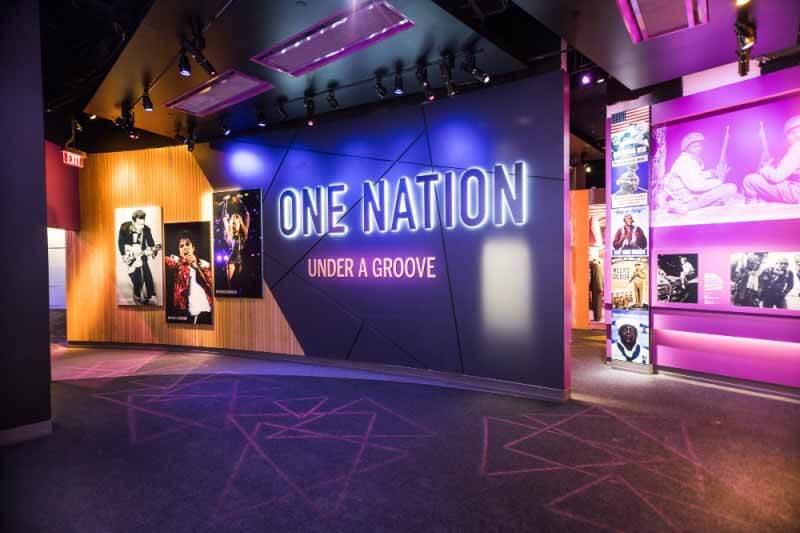
Five smaller galleries extend from Rivers of Rhythm, each concentrating on a timeline in American history and music — Wade in the Water, Crossroads, A Love Supreme, One Nation Under a Groove and The Message. There’s also an additional gallery that rotates exhibits. The first, which opens later this year, tells the story of the Fisk Jubilee Singers. “One thing about the museum is it isn’t genre-driven or artist-driven,” says Henry. “It’s really history-driven, and that enables us to bring a river into the metaphor because it basically says that we live and experience music not by genre, but by the stuff we love. There are lots of influences that look and behave like streams flowing into the river.” While it offers a wonderful perspective to start at the beginning of the timeline, it isn’t imperative to chronologically visit the galleries. You can enter each of them from Rivers of Rhythm, in whichever order you choose. “Water doesn’t flow the way we tell it to; it flows the way it flows,” says Henry of the connection between the galleries.
RELATED: Have You Ever Heard of the Nashville Nine?PinEven the interior design of each gallery complements its theme. “One of the things that we talked about when we were designing the galleries was using authentic materials everywhere we can,” says Henry. “I love that it’s not perfect. It looks like it has been here a while. This wood floor feels like it has been partied on before.” Crossroads, the gallery pictured here,picks up in the early 1900s at the beginning of The Great Migration and the emergence of the blues.
We are grateful to all our sponsors:
Throughout the museum, there are 25 interactive components, custom-designed by Nashville-based Gallaher and Associates. Upon arrival, each guest receives a bracelet that contains a technology chip specific to that particular person. Tapping the bracelet after your participation at each station offers a post-visit opportunity to retrieve fun memories from your tour, such as music playlists, photos and videos, which you can then share via social media. There’s even a rap battle booth where you can test your freestyle skills or battle with a buddy, a choreographed dance interactive, and a chance to create your own hit song. “We really want it to be an intergenerational experience, with lots of technology and also lots of artifacts,” says Henry of the combination of digital elements and memorabilia collections that you’ll see on your tour. “If folks want to see the real thing, it’s here. If folks want to play with the technology, that’s here, too. Everybody relates to music a little differently.”
PinA beautiful way to get visitors invested, the interactive programming mixed with historical context is both fun and educational. “We think this interactive will be one of the favorites,” says Henry of a station that offers guests a chance to sing with a gospel choir. “Dr. Bobby Jones worked with us to create this. He comes out and invites you to put on a robe (which will be hanging up post-COVID), then he teaches you a song. You sing along, then take the video with you.”
The pieces assembled for each museum gallery are carefully curated, sourced from both individual collectors and larger facilities. In A Love Supreme, which gives you a sense of the Harlem Renaissance and the rise of jazz, the dark, smoky ambiance transports you to another time and place as you peruse items from vocal greats such as Billie Holiday and Ella Fitzgerald. There’s even a trumpet once played by Louis Armstrong. “The Louis Armstrong trumpet is on loan from the Louis Armstrong Museum in New York,” Henry tells us, “but just prior to being here, it was just across the street at the Ryman. When it finished up there, they Fed Ex-ed it to New York, cleaned it up and made sure it was in good shape, and then they sent it back to Nashville.” In other galleries, collections range from real solid gold records to funkadelic clothing worn by George Clinton.
PinThe Message starts in the late 1960s, with the introduction of urban renewal, “The Bronx is burning” arson epidemic, the start of the war on drugs, and consequently, the beginnings of hip-hop. “The Message shows how music moves beyond margins,” Henry says of the gallery. Troy Duff, a local graffiti artist, added his dynamic art to the walls, and rumor has it you’ll be able to buy replicas of his works in the gift shop.
We are grateful to all our sponsors:
Now that the official ribbon-cutting has taken place, the highly anticipated museum is finally open to the public. There is no question that Nashville is all the better for it. “There’s a lot of Nashville and Tennessee history as you go through the museum, so it can still be [considered] a ‘Nashville and Tennessee museum;’ the story fits,” says Henry. “But it’s a national story that we’re telling. Therefore, it welcomes everybody.” And welcoming everyone is something the museum board and staff truly look forward to, particularly given that memberships were already being sold two years ago.
With COVID precautions in place, such as timed ticketing, a nurse at the entrance to take temperatures, and modifications for some of the museum’s interactive programming, the National Museum of African American Music is ready to safely offer an experience like no other. “I hope visitors get the sense that music brings us together,” Henry offers in summation. “This experience of music is something that we share as Americans and people around the world. I hope people come away appreciating that African Americans — Africans who were brought to America — are at the center of the American story; they are not on the margin. And that doesn’t mean it has to exclude anyone; it doesn’t mean that we have to be angry with one another. In fact, it’s just the opposite. If we can acknowledge that, then we can all come together and have a good time. We can do a rap battle together, and make a video, and say, ‘I made a new friend today.’”
The National Museum of African American Music is located at 211 7th Ave. N. #420, Nashville, TN 37219. For advance tickets, call (615) 301-8724 or visit the website. All images courtesy of NMAAM/353 Media.
**********
For your daily dose of StyleBlueprint sent straight to your inbox every morning, click HERE!
Jenna von Oy Bratcher is StyleBlueprint's Editorial Operations Manager and Lead Content Editor. The East Coast native moved to Nashville almost two decades ago, by way of Los Angeles. She is a lover of dogs, strong coffee, traveling, and exploring the local restaurant scene bite by bite.
Our unofficial motto at StyleBlueprint is "Be kind. Do good." We encourage this to be the basis for all comments on our articles. Provide feedback that adds to the story. Some controversy or disagreements are part of any good dialogue between friends, but anything that tears down or belittles others is subject to disapproval or removal. Thank you for being a member of the StyleBlueprint community! View our Community Guidelines.