

How to Build the Perfect Charcuterie Board in 4 Easy Steps
A beautiful charcuterie board is one of the quickest, easiest dishes you can make. We have pro tips to help you build the perfect one!

Whether it’s an afternoon snack, the pre-cursor to a family dinner, or the main affair at a porch hangout, a thoughtfully prepared charcuterie board never fails to delight. We enlisted the help of caterer Johnny Haffner to give us some direction on how to put together the perfect charcuterie board and where we can pick up the components.

Building a charcuterie board is simple — grab a few kinds of cheese and a selection of cured meats, add a smattering of tasty accompaniments and crackers or bread, and throw it all on a pretty plate, right? No matter how you frame it, a charcuterie board is one of the easiest dishes you can make. But a memorable board requires a bit more effort than merely dumping cheese cubes on a platter, a move Johnny strongly advises against. Instead, a good charcuterie board takes some thoughtful preparation and an investigative eye at your local grocery store. Here are the steps to building the perfect board.
Choose a serving platter.
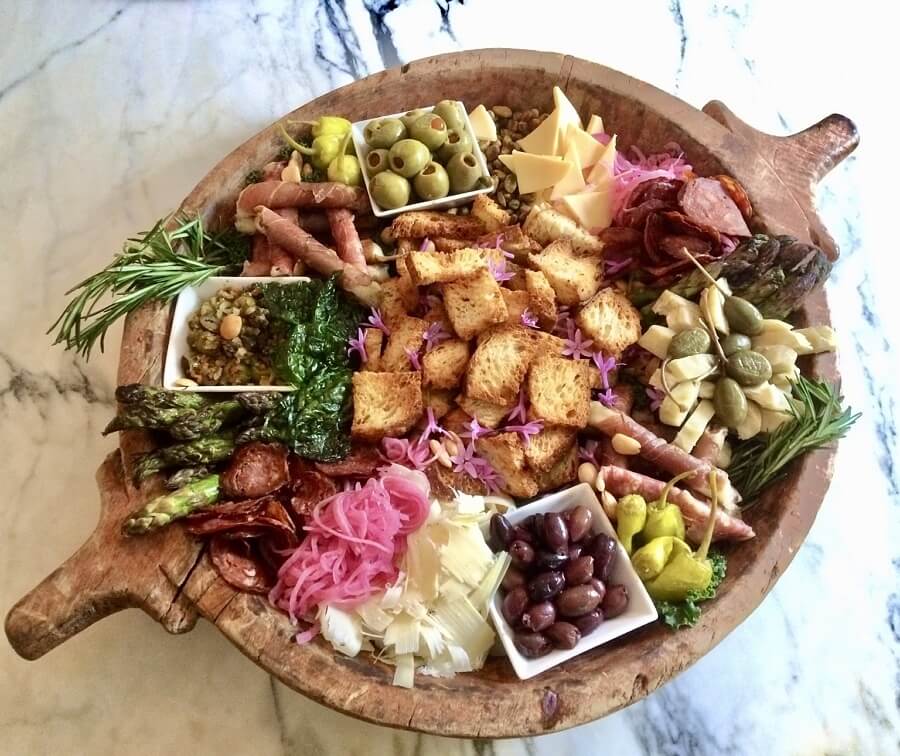
First things first — a beautiful array of charcuterie deserves an equally beautiful platter. But what’s the ideal vessel to show it all off? The answer partly depends on where your dish is headed. If you’re bringing it to a family gathering, for example, it’s essential to make sure your platter isn’t too heavy or large, which might restrict whether or not it fits on a coffee table or kitchen island. It’s also beneficial to choose a serving dish with side handles, which will undoubtedly make transporting it a bit easier. If you’re planning to stay at home, the platter possibilities are endless — be creative! Rustic baskets, elegant antique bowls, slate slabs, and even natural wood cutting boards are all fun, eye-catching choices.
Pro Tip: If you’re taking your charcuterie tray elsewhere, it’s easiest to pre-cut and prepare all of your ingredients ahead of time, and bring a box of your components to set up once you get there. Johnny advises showing up a few minutes before the rest of the guests. “You never want to be in the kitchen building something while they’re trying to eat off the tray,” he tells us. “And they will!”
Select your meats and cheeses.
The foundation of your board begins with meat and cheese, and with all of the delicious options out there, it’s easy to get carried away. Johnny cautions against going overboard, saying that sticking with three of each is typically enough to offer variety without setting yourself up for a lot of wasted food. “I think you confuse people if you give them too many choices, then you have all the leftovers that just have to be thrown away,” he explains. “The goal is to have just the right amount, so you don’t throw anything in the trash.”
So, where should we go to find the best assortment? If you have a nearby mom and pop shop that carries a wide range of local and imported cheeses, you’re in luck; a cheesemonger is an excellent source of knowledge and suggestions. With that said, you can also find everything you need at your nearby grocery store as long as you know what to look for.
With cheese, the goal is to represent different textures and flavors. You should plan to find one soft, spreadable cheese such as Boursin or triple-cream brie, one hard cheese such as Parmigiano-Reggiano or Manchego, and one “colorful” option such as blue cheese. If you are looking to add a somewhat unusual cheese, burrata is exquisite, especially when drizzled with balsamic glaze (frequently found with the other balsamic vinegar at the grocery store). Just be sure you aren’t selecting a bunch of cheeses that are more adventurous than your audience. “If you’ve got something obscure, you’re going to spend your night telling everyone what it is,” Johnny says. You want your board to reflect your efforts without intimidating anyone. While you may be drawn to cheeses that are bolder or “stinkier,” your key consideration should be who you’re serving. “It depends on your crowd,” he continues. “That’s the real key to making anything. Know your audience.” Labels can also cut down on confusion when your cheese types are less obvious.
Pro Tip: Boursin is one of the most popular soft cheeses, and it’s simple to make one yourself. For an easy and inexpensive homemade version, Johnny suggests grabbing a log of goat cheese and whipping in some herbs and spices. For hard cheeses, such as pecorino or parmesan, try using a vegetable shaver so you can stack slivers of the cheese on your tray rather than leaving out the entire wedge. Finally, if you only have access to cheese cubes, try cutting them into triangles for an alternate presentation that makes them easier on the eye and easier to eat!
When it comes to meats, artisanal sausages, dry-cured bresaola and smoked duck might top the list of exciting options. Still, you can’t go wrong with the ever-popular salami and pepperoni. Prosciutto is a crowd-pleaser, too. Johnny recommends having one spicy choice, such as chorizo or capicola, to bring in some heat. It doesn’t necessarily broaden the flavor profile if all of your selections come from the same country or region, so feel free to mix it up — a French Comté and an Italian Soppressata can peacefully co-exist on your charcuterie board.
Pro Tip: When slicing meats at home, such as salami or chorizo, wait to take them out of the fridge until you are ready to cut them — it is easier to do while it’s cold, and you get a prettier, more precise slice.
Find fun and unique accompaniments.
When choosing accompaniments for your platter, it’s good to have both acidic and sweet components to complement the flavors of your meats and cheeses. Though it may seem daunting to find imported items such as stuffed zucchini blossoms or quince paste, you can find suitable accompaniments anywhere. Brined olives, caperberries, marinated artichokes and pickled peppers are all readily available at a good grocery store. Sometimes, you can even find fun specialty items such as Gigante beans, oven-roasted or sundried tomatoes, and tapenade. You can also typically find a good chutney, honey or fig jam to add a sweet element, which works well to balance out the more pungent cheeses. If you’re feeling ambitious and you can manage to find an Italian mostarda, you’ll thank us later. “The hot item this year that everyone is talking about is truffle honey,” adds Johnny, which has become one of his most highly requested charcuterie board accompaniments. But even if you can’t locate some of the more extravagant accouterments, vegetables, fresh or dried fruit, and nuts are all easily found options, and condiments such as grainy mustard and fruit preserves pair well, too.
Pro Tip: Fresh herbs add a beautiful and aromatic filler for any gaping holes in your charcuterie board, and Johnny recommends sprinkling in nuts such as Marcona almonds here and there, rather than putting them in a bowl, to add another pretty — and super tasty — touch.

Serve your charcuterie board with complimentary bread and libations.
All good charcuterie boards need some sort of cracker or bread on which to slather jams and layer thick cheese slices. If you’re going the cracker route, find something that doesn’t overwhelm or conflict with the other flavors on your platter. Melba toast, and even fruit and nut crackers such as Raincoast Crisps, make great cheese companions. If you want the best of both worlds, crostini is the way to go. Small rounds of toasted or grilled bread, crostini is crunchy like a cracker but still offers the taste of fresh bread. And it’s also simple to make — just grab a baguette or artisan loaf, slice it up and brush it with olive oil, then lightly crisp it in the oven. If someone in your inner circle is carb- or gluten-free, you can offer fresh veggies such as cucumbers, peppers and carrots as a substitution, which provides an alternative on which to spread cheese.
When you’re serving a charcuterie board, it also never hurts to have a little something to cleanse the palate. Prosecco is the perfect choice to sip with your charcuterie board — it’s light and bubbly, and it complements a broad range of flavors. Chilled Pinot Grigio and rosé are also good options, particularly during the warmer months.
Bon appétit!
**********
Find more fabulous recipes and meal ideas in our archives. Click HERE!

Jenna von Oy Bratcher
Jenna von Oy Bratcher is StyleBlueprint's Editorial Operations Manager and Lead Content Editor. The East Coast native moved to Nashville almost two decades ago, by way of Los Angeles. She is a lover of dogs, strong coffee, traveling, and exploring the local restaurant scene bite by bite.